Sleep materials & construction
Naturepedic Serenade Organic Hybrid: A Guide to Materials and Support
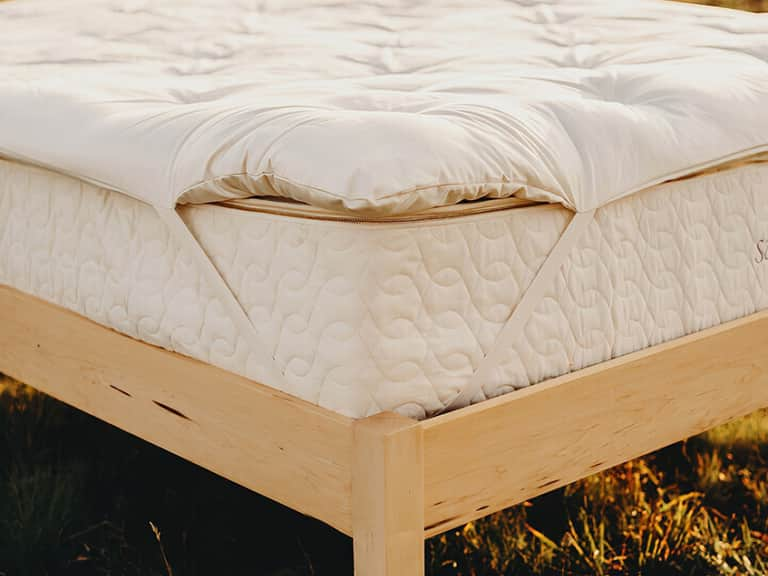
A mattress is a small landscape of layers. In an organic hybrid, natural fibers and foams meet a spring system designed to bear weight, respond to movement, and distribute pressure. Understanding how those parts work together offers a clearer way to assess the Naturepedic Serenade—and whether its construction may suit your sleep preferences.
Reading a mattress from the surface inward
When you lie down, the first sensation comes from the uppermost materials: the fabric beneath the sheet, the padding under it, and the comfort layer that begins to yield beneath your shoulders, hips, and other points of contact. Lower down, a support system steadies the body and helps keep the mattress from collapsing unevenly. A hybrid mattress places a coil unit beneath its comfort layers, combining the spring system’s responsive movement with a softer, more contouring surface.
The Naturepedic Serenade is an organic hybrid mattress built around that layered idea. Its appeal is not explained by the word “organic” alone, nor by coils alone. The important question is how the materials are selected, how they are assembled, and what sensations the construction is intended to produce. A person comparing mattresses can use those details to make a more informed assessment than a broad promise of comfort or wellness.
Specifications may change between product generations, sizes, or markets. For exact information, consult the current product label and manufacturer documentation, including the stated materials, certifications, firmness options, and care instructions. This guide focuses on the construction principles and evaluation questions that help readers interpret those details.
What “organic” tells you—and what it does not
In mattress descriptions, organic can refer to a particular material, such as cotton or wool, rather than every part of the finished bed. The word therefore needs context. Is it describing the cover, a batting layer, or a filling? Does a certification apply to the raw fiber, the processing, or the final product? These distinctions matter because a mattress is a composite object: ticking, comfort layers, adhesives or joining methods, and the support unit each have their own material histories.
Certifications can make those histories easier to investigate, but they are not interchangeable. A textile standard may address how a fiber is grown and processed; another certification may focus on chemical emissions or restrictions on certain substances in a finished product. Readers should check the scope of the specific certification and the products or components it covers. A logo, by itself, does not explain every step in manufacturing.
Natural fibers are also not automatically right for everyone. Sensitivities differ, and a material’s origin does not determine whether a sleeper will find it comfortable. Some people prioritize a particular feel, temperature response, or maintenance routine; others are chiefly concerned with ingredient disclosure or certification. A useful materials comparison begins with personal priorities and then checks whether the available evidence speaks to them.
For the Serenade, the most practical approach is to review the current construction breakdown rather than relying on a single headline. Note the cover materials, the composition and thickness of comfort layers, the support unit, and any stated certification for each. If the product page or tag does not make a detail clear, that uncertainty is a reason to seek clarification, not to assume a particular specification.
The role of surface materials
The top of a mattress shapes first contact. A quilted cover or thin cushioning layer can make the surface feel softer before the body reaches the deeper comfort material. Beneath it, a latex layer—where included in the documented construction—can offer a buoyant, springy response. Latex tends to compress under load and rebound when pressure lifts, producing a different sensation from the slower, closer contour often associated with memory foam.
That distinction is best understood as a tendency, not a universal rule. The feel of latex depends on its formulation, density, thickness, and how it is layered with other materials. A thinner layer over coils may feel quite different from a deep latex comfort system. Likewise, the ticking and any fiber batting can influence initial softness, moisture exchange, and how directly the sleeper senses the material below.
Many shoppers are drawn to natural fibers because they want to understand what touches the body and how the bed may manage warmth and moisture. Cotton and wool, for example, have distinct structures and uses in bedding. Yet a fiber’s presence does not guarantee that a mattress will sleep cool for every person. Room temperature, humidity, bedding, sleepwear, body chemistry, and the sleeper’s own thermal comfort all contribute to the experience.
When assessing the Serenade’s surface, ask what “plush,” “medium,” or another firmness description means in the context of its layers. Firmness is a subjective perception, and one person’s supportive medium may feel quite different to another. The body’s shape, mass, sleeping position, and pressure sensitivity all influence how deeply a person settles into a mattress.
How a coil support system works
Under the comfort layers, coils provide a network of spring elements that compress in response to weight. In a pocket-coil design, individual coils are enclosed in fabric sleeves rather than joined into one open, continuous spring grid. This arrangement allows neighboring coils to respond with some independence. If the construction uses a pocketed unit, its behavior depends on more than the number of coils: wire gauge, coil shape, tension, arrangement, and the surrounding layers all play a part.
A spring unit’s central task is to support the body without feeling rigid or unstable. It also influences how easily a sleeper can change position. Coils commonly have a more immediate rebound than dense foam, which some people experience as a lively or responsive surface. That resilience may make turning feel less effortful, though the comfort layers above the coils can soften or moderate the sensation.
Support is not simply a matter of firmness. A well-matched mattress should allow the body to settle while helping maintain a reasonably neutral alignment for that sleeper. A person lying on their side may need room for the shoulder and hip to sink; a back sleeper may value an even, stable surface through the torso; a stomach sleeper may prefer less sink at the midsection. These are useful starting points, not fixed rules, because body proportions and comfort preferences vary.
Edge support is another construction question. Some hybrid mattresses reinforce the perimeter with firmer coils, foam, or another stabilizing element. Others rely more on the overall spring unit. Stronger edges can make it easier to sit near the side or use more of the sleep surface, but the result depends on the design and the person’s expectations. Check the current Serenade specifications for details rather than assuming all hybrid models use the same reinforcement.
Hybrid, all-foam, and all-latex: what changes?
A hybrid mattress combines a coil support system with comfort layers made from foam, latex, fibers, or a combination of materials. The coils provide a spring-based foundation, while the upper layers influence contouring and pressure relief. This division of roles can create a balance between cushioning and a more buoyant response, but “hybrid” describes a broad category, not one standardized feel.
An all-foam mattress replaces the coil unit with foam support layers. Depending on the foam type and construction, it may offer closer contouring and less pronounced spring-back. Some sleepers appreciate that enveloping feel; others prefer a surface that responds more quickly when they move. Foam designs also vary widely in firmness, temperature behavior, and motion response, so the category label cannot predict every experience.
An all-latex mattress uses latex layers for both comfort and support, without a conventional coil core. It can provide a buoyant, elastic feel, although the exact response depends on the latex type, layer arrangement, and firmness. Compared with a hybrid, it may feel more uniformly springy from surface to base. A hybrid with latex comfort layers, by contrast, combines latex’s surface character with the separate support behavior of coils.
These comparisons are most useful when they focus on sensation and function rather than declaring one construction superior. A hybrid may interest a sleeper seeking a more responsive surface; an all-foam model may appeal to someone who values deeper contouring; and an all-latex mattress may suit someone who prefers elastic support throughout. The best match depends on how a person sleeps, what they feel comfortable on, and how they respond to movement and pressure.
Pressure distribution and body alignment
Pressure develops where the body presses against the sleep surface. The shoulder and hip can be prominent contact points for side sleepers, while a back sleeper may experience pressure differently across the pelvis, shoulders, and heels. Comfort layers help distribute that load over a broader area. The support unit beneath them contributes to how the mattress holds the body and whether one region sinks disproportionately.
A mattress cannot be judged by a single test position. Spend time on it in the posture used most often, and notice whether the shoulder, hip, or lower back feels strained. Consider whether the body seems level and supported, while remembering that an initial impression may change after several nights. A new mattress can feel unfamiliar, and comfort is subjective. Persistent pain or sleep disruption should not be treated as proof that a specific mattress will solve a medical problem.
Firmness labels can help organize choices, but they are not precise measurements shared consistently across the industry. A “medium” label is a manufacturer’s description, not a guarantee that every sleeper will perceive the same degree of softness. Weight distribution also matters: two people of equal weight may engage the layers differently because their proportions and sleeping positions differ.
For a couple with different preferences, consider the mattress’s motion behavior and whether its available options accommodate both sleepers. A coil system may feel lively, but pocketed coils and cushioning layers can reduce some movement across the surface. How much movement a partner notices depends on the whole construction, the sleepers’ movements, and the bed frame—not simply on the presence of springs.
Responsiveness, motion transfer, and everyday use
Responsiveness describes how quickly a surface reacts as weight shifts. In practical terms, it affects whether the mattress feels easy to move on or seems to hold the body in a deeper impression. Coils and latex are often associated with quicker rebound, while some foams respond more slowly. But a hybrid’s feel is the result of layers working together; a soft comfort layer can temper a spring unit’s liveliness.
Motion transfer is related but distinct. It describes how much movement in one part of a bed is felt elsewhere. Individual pocket coils may limit some movement because each responds more independently than a tightly connected spring system. Comfort materials can further absorb or spread motion. Still, the term “motion isolation” should not be read as a promise that a partner’s movement will be completely undetectable.
Try to assess both qualities in the context of real use. If you share a bed, notice whether a change in position or getting in and out of bed disturbs the other person. If you sleep alone, responsiveness may matter more for ease of turning or getting up. A mattress that feels lively to one sleeper may feel too active to another; the same feature can be an advantage or a drawback depending on preference.
Temperature and the sleep environment
People often look to natural materials when considering warmth and airflow. But mattress temperature is shaped by a system, not one ingredient. The cover, comfort layers, coil spacing, sheets, mattress protector, room climate, and a sleeper’s own physiology all matter. A breathable textile cannot guarantee a cool night if a thick protector or heavy bedding changes how heat and moisture move through the setup.
Coils leave open space within a mattress core compared with a solid block of material, but that fact alone does not determine how cool the surface feels. The layers above the coils are in direct contact with the sleeper and can influence heat retention and moisture movement. Likewise, “temperature regulating” is not a promise that a mattress will keep every body at a preferred temperature under every condition.
For a more useful evaluation, consider the full bed: mattress, protector, sheets, duvet, room temperature, and airflow. Make one change at a time if you are trying to identify what contributes to nighttime discomfort. A lighter sheet or less insulating duvet may affect comfort as much as a change in mattress material.
A practical checklist for evaluating the Serenade
Before choosing any organic hybrid, translate the product description into questions that can be answered. The following checklist helps separate material facts from marketing language and personal preference:
- Materials: What are the cover, comfort layers, and support components made from? Are the layers described clearly?
- Certification scope: Which materials or finished-product attributes are covered by each certification? Is the certification current and applicable to the model being considered?
- Support and feel: What firmness options are available, and how might they interact with your sleeping position and body shape?
- Movement: Does the surface respond quickly enough for your comfort? If you share a bed, how noticeable is a partner’s movement?
- Fit: Does the mattress work with your bed frame, foundation, and preferred sheet depth?
- Care and policies: What are the current instructions for care, delivery, trial periods, returns, and warranty coverage?
- Personal comfort: Can you test the mattress under realistic conditions, and does the available return policy give you time to assess it at home?
It is also worth checking the date and source of any information you use. Product construction can evolve, and retailer summaries may not include every layer or certification detail. The manufacturer’s current specifications and the mattress label are better references for model-specific questions.
What the design can—and cannot—tell you
The Serenade’s organic hybrid concept offers a useful framework for understanding how material choices and coil support may interact. Natural components can provide information about fiber sourcing and manufacturing standards; latex, where specified, can contribute a resilient comfort layer; and coils can add responsive support beneath the surface. Together, these elements describe a construction approach, not a guaranteed outcome for every sleeper.
No material label can predict a person’s comfort with certainty. A mattress may be well made and still feel too firm, too soft, too warm, or too springy for a particular body. Nor should “organic” be taken to mean that a product has medical benefits or is automatically the right choice for allergies or sensitivities. Those questions require attention to the exact ingredients, individual needs, and relevant professional guidance.
The clearest way to assess the Naturepedic Serenade is to look at the whole assembly: verified material details, the construction of the comfort layers, the behavior of the coil system, and the conditions under which the mattress will be used. Then compare those facts with how you sleep. In that careful reading—part material study, part personal observation—the words “organic hybrid” become more than a label. They become a starting point for deciding whether a particular sleep surface belongs in your room.